Key Takeaways
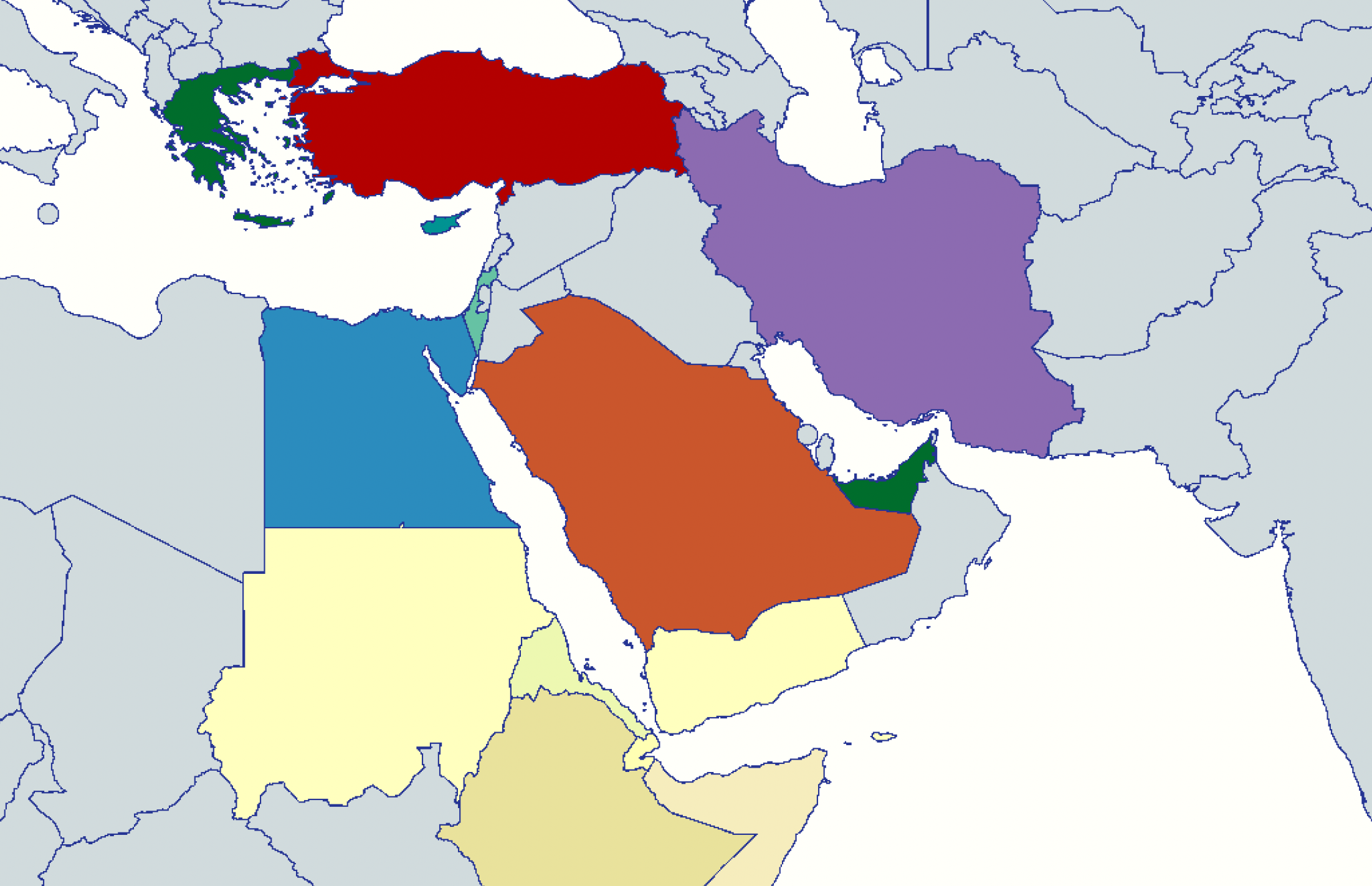
A unified, coherent and comprehensive spatial continuum: the Eastern Mediterranean and the Red Sea – from Cyprus through Suez and down to the Horn of Africa.
Different classes of actors, different strategies at work: regional vs. local; static vs. dynamic; control-oriented vs. power projection-oriented.
Israel and Egypt: the only two established macro-regional actors with access to both seas from their national territory. Turkey as the third large contender, needing to ensure access to the Red Sea from outside the area. Greece, as interested balance-checker. Gulf States as partial stakeholders.
Unrecognized sovereigns, disruptors and proxies: Somaliland, Houthi forces, Somali pirates.
Critical points of contention and split areas of influence: Cyprus and the Horn of Africa; Gaza and Yemen.
Such seemingly segregated theaters of operations are disputed upon a transformative chessboard, across dynamic ad-hoc alliances and continuously evolving joint (geoeconomic) ventures. Friendships are not static, enmities change targets.