
Introduction: Looking North, Gazing East
The Russian invasion of Ukraine proved to be a game-changer for the European energy suprastructure, not only in terms of market dynamics and a renewed impulse for autonomy, but also as a matter of operational concepts deployed in understanding the Union’s position on the ever-changing resources chessboard. What once seemed to be taken for granted – cheap and easily available flows of hydrocarbons from Russia – gradually ended starting with 24th February 2022.
Multiple packages of sanctions came into force since that moment, prompting the European Union to look to multiple alternatives on the short-term, either as LNG imports coming from the United States, Qatar or Algeria, or for increased steady pipeline supplies from Norway, Algeria and Azerbaijan (via Turkey) (see Figure 1, below). In an instant, the energy map needed to be reconfigured, allowing for extra flows from existing origins and the swift operationalization of regasification terminals in Germany, France, Finland, Italy or Greece (see Figure 2, below).
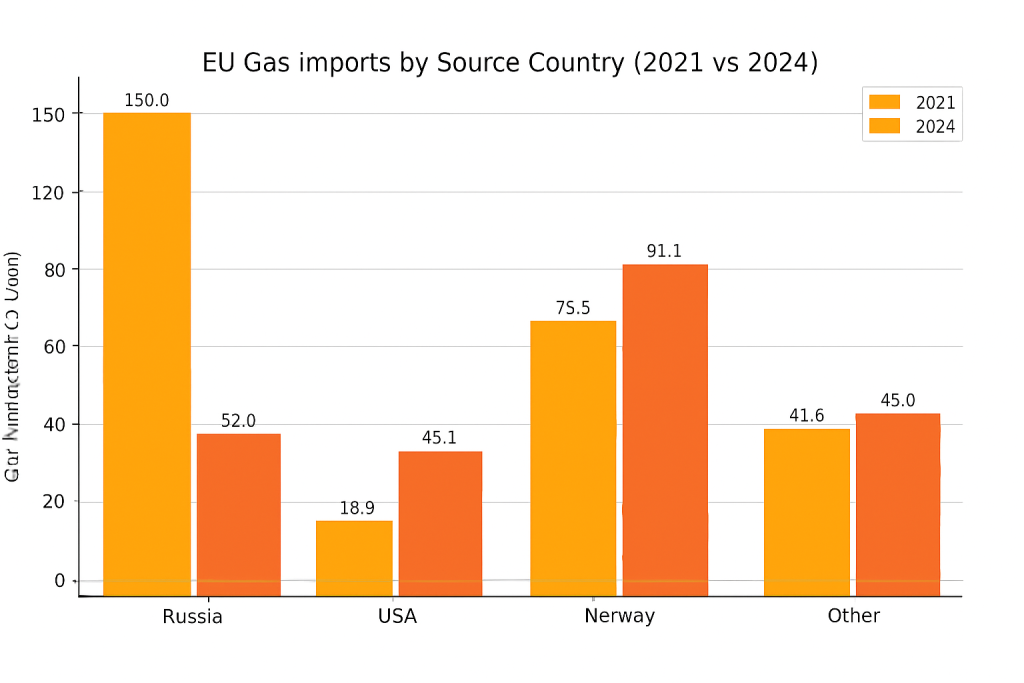
Figure 1 – EU Gas Imports
Source: European Commission based on ENTSO-G and LSEG data
However, on the medium- and long-term, the European Union set its course towards an increased autonomy paradigm, pushing for more green electricity into the mix, but inheriting an intractable gas dilemma: where and how to get sufficient quantities to replace at least part of the Russian supply without over-relying (again) upon distant providers? Only two directions seemed feasible, one within the frontiers of the Union (Romania) and one on the very brink of the EU, engaged into a model of variable economic integration (Norway).
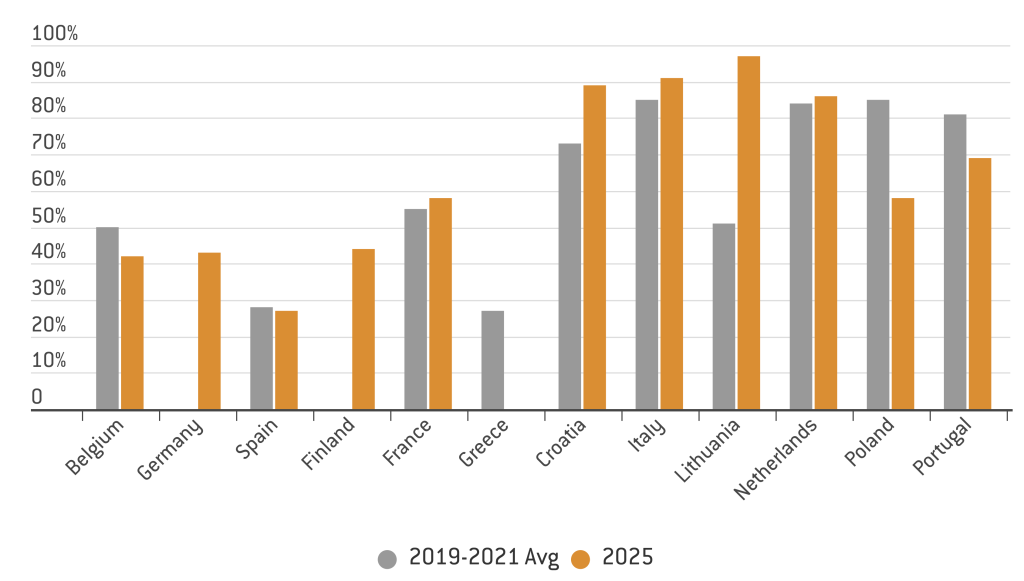
Figure 2 – LNG Terminals Usage in 2025 vs. 2019-2021 average for EU Member-States
Source: Bruegel based on GIE-ALSI
The (Gas) King in the North: Oslo’s Consolidation as a Key Supplier
Already before the invasion of Ukraine in 2022, Norway occupied a privileged position within the EU’s energy portfolio of import sources. As regards the gas delivered through pipelines (thus excluding LNG from this computation), it was second only to Russia. After that moment, it has steadily increased its supplies to overcome Moscow’s market share and replace (at least partially) the volumes that disappeared from the European system after the imposition of sanctions and closure of the Nord Stream pipelines.
Although, in absolute terms, the increase does not appear drastic (from 79.5 bcm in 2021 to 91.1 bcm in 2024), it is very significant in relative terms when compared to an abrupt Russian decrease of delivered pipeline gas (see Figure 3, below) and coupled with a trend of general decreased overall gas consumption within the EU. The disparity between absolute and relative terms is also compounded by the fact that Russian decreases relate predominantly to volumes delivered through pipeline, while still retaining a fair portion of its previous LNG quantity in the bloc’s market. Thus, in 2024, the main delivery destinations of these increased volumes were Germany (56 bcm), France (16 bcm) and Belgium (16 bcm), alongside considerable quantities dispatched to the United Kingdom (30 bcm).
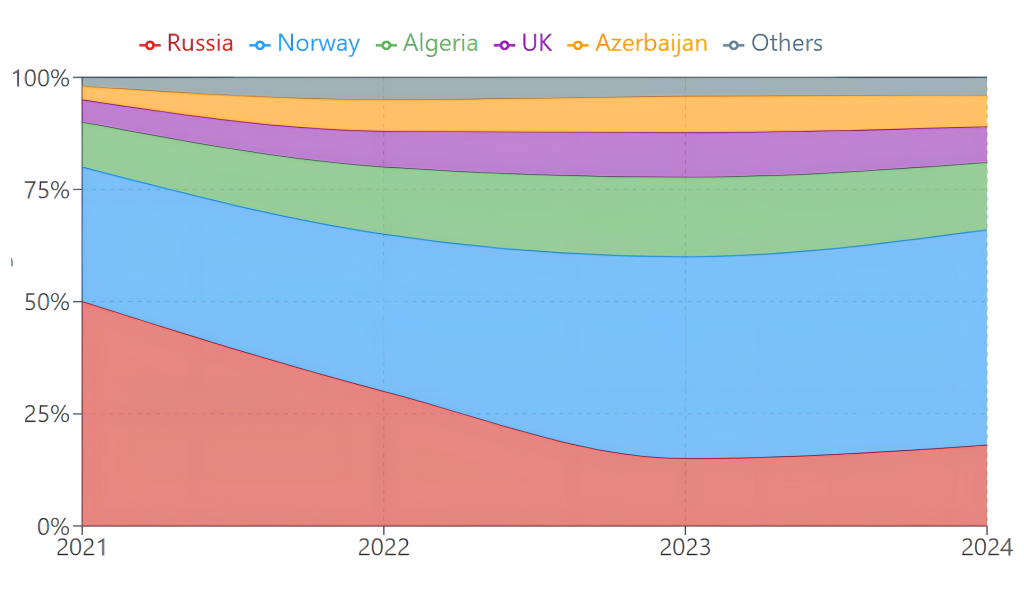
Figure 3 – EU gas pipeline imports by source (%)
Source: Based on data from JRC EU Gas Security of Supply Dashboard, European Commission
This preeminent position of Norway within the EU’s supplier portfolio was not – however – something emerging overnight. It was the result of consolidation, building (swiftly) upon already existing foundations. It was not improvised in 2022, but carefully directed after decades-long development in the upstream and midstream infrastructure: extensive extraction, processing and transit capacities which could be harnessed an extra mile in case of necessity.
As regards the actual configuration of Norway’s operations, production is concentrated mainly under the umbrella of Equinor (majority state-owned by the Norwegian government) who maintains and exploits a significant number of high-efficiency gas fields in the Norwegian Continental Shelf (NCS), such as Troll, Ormen Lange, Oseberg, and Åsgard – long-standing pivots of Norway’s export volumes. For instance, the Troll field by itself accounts for more than 40% of the country’s gas reserves, being one of the largest in Europe and delivering 42.5 bcm in 2024.
The next piece in advancing the resilience and reliability of the Norwegian gas supply is the pipeline system, ensuring the transit through a number of four assets: Langeled (to the UK via Easington), Europipe I & II (to Germany via Dornum), Zeepipe (to Belgium via Zeebrugge) and Franpipe (to France via Dunkirk). The structure is run by Gassco, also a state-owned entity, which ensures the transfer of over 100 bcm per year from NCS to continental Europe and to the United Kingdom.
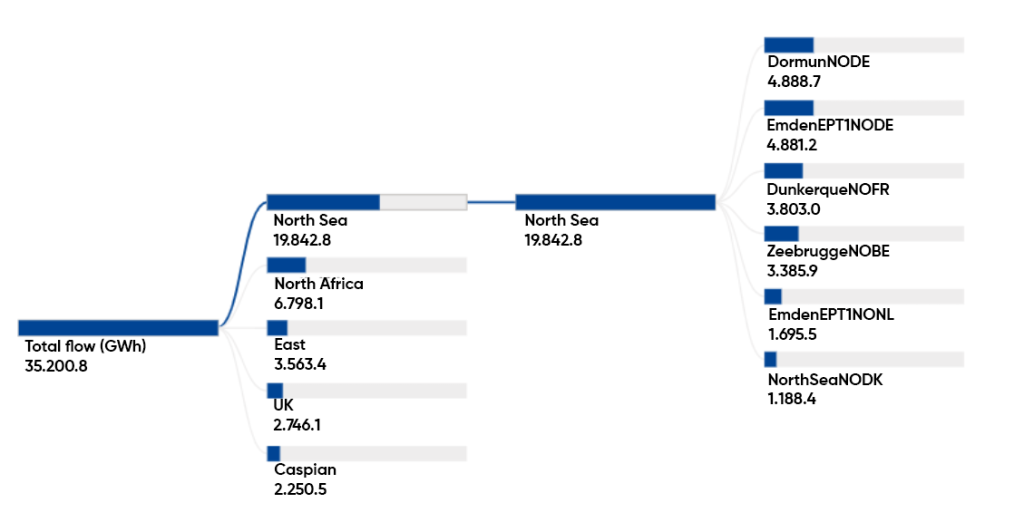
Figure 4 – Gateway for Imported Pipeline Gas into Europe (GWh)
Source: JRC EU Gas Security of Supply Dashboard, European Commission
In this context, Norway’s entire gas production and export ecosystem is capable of almost uninterrupted flows, having high uptime rates and multiple redundant capacities, elements which increase the stability and predictability of supply. Moreover, a very important element in Norway’s strategic significance for the EU is the lack of domestic gas demand on a large scale, allowing Oslo to deliver a very high proportion of the resources extracted, without concerns of having to hold back quantities in a variable manner.
Nonetheless, despite its indisputable advantages in terms of stability and reliability, the Norwegian supply also provides structural limitations, which should temper (unrealistic) expectations of Oslo acting as an inexhaustible energy guarantor for the continent. First of all, there is a quantitative plateau that Norway is close to reaching, given the maturity of its most important gas fields on the NCS. Although applying the most modern methods for prolonging the life-cycle of assets such as Troll or Åsgard, no significant increase of capacities may be expected to come online in the future. In this sense, there is no potential scale-up in the North that might compensate for further drops in gas volumes.
Norway might be a ‘shock absorber’ for the European Union’s shifting supply portfolio, but it is a finite provider of stable – and clearly defined – quantities. Its resources are not on an ascendent path and there are no (significant) spare volumes that could be reallocated to the EU in case of further market volatility or supply disruptions for LNG. Oslo is – thus – an irreplaceable friend and steady provider, but not a one-stop-shop for any kind of energy supply trouble; a pillar of stability and predictability, but not a perpetual ‘get out of jail free’ card.
A Rising Star in the East: Romania’s Black Sea Perspectives
While Norway did consolidate its position as an anchor for Europe’s short- and medium-term energy stability, in the aftermath of 2022, Romania also paced along to operationalize long-stalling plans, establishing itself as a safe haven for gas transit and production.
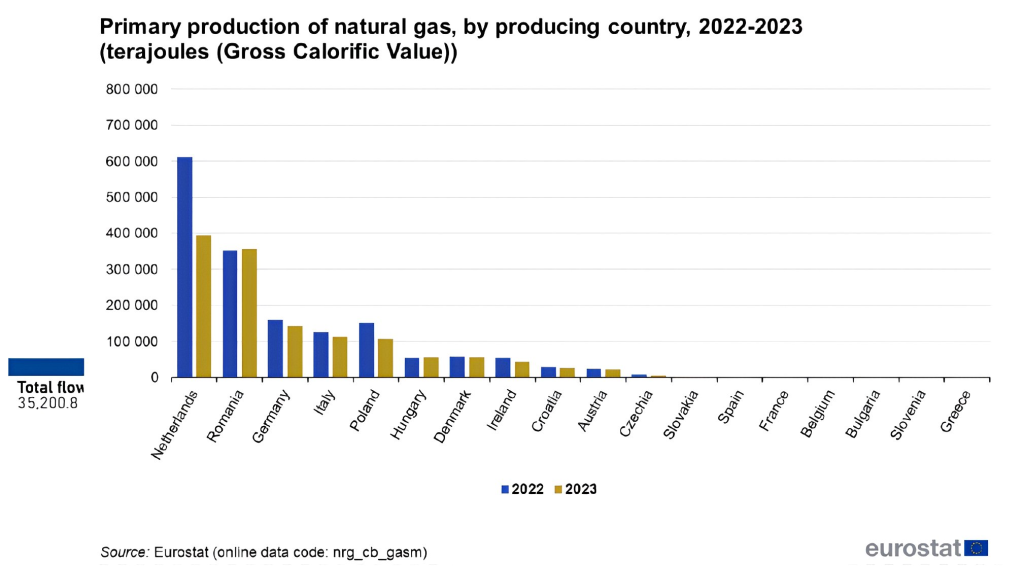
Figure 5 – EU Gas Production by Country (2022-2023)
Source: Eurostat
After the Russian invasion of Ukraine, Romania ramped up production and maintained its position as second-largest gas producer in the European Union (following the Netherlands), managing to – finally – surpass all competition in the second quarter of 2024. Not necessarily due to a steep increase in absolute volumes, but rather as a matter of relative decline in the Dutch gas fields (especially in the context of the phased shutdown of the Groningen asset).
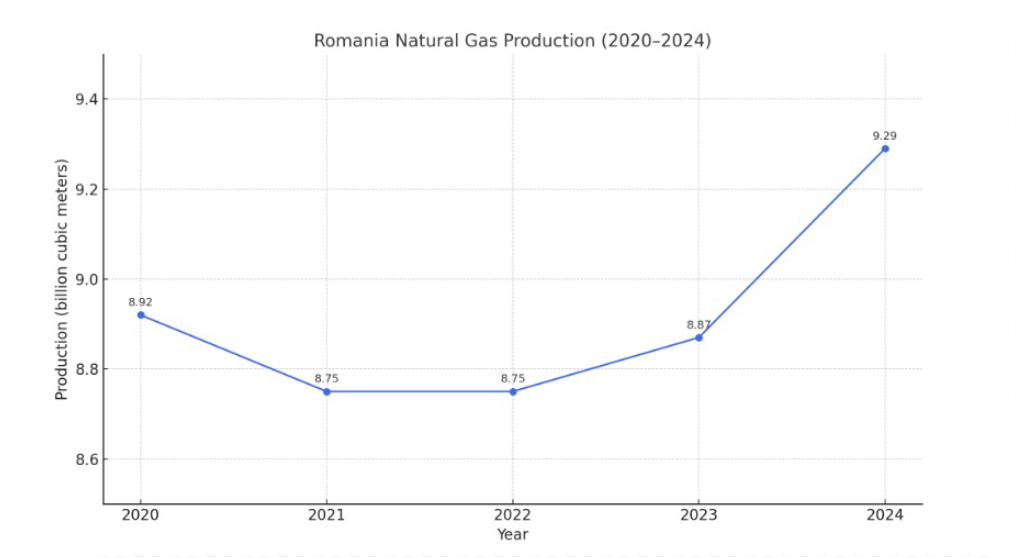
Figure 6 – Romania Gas Production (2020-2024)
Source: Data computed from CEIC (2021-2023); INS and CNSP (2020; 2024)
In this complicated geopolitical context, with Romania seeing its own external supplies imperiled by the post-2022 situation, Bucharest managed to undergo a significant repositioning in the continental energy matrix. Surpassing stagnation and the decline of the energy industry which had led to a certain (minor) import dependence in the last decade, Romania commenced the consolidation of its energy autonomy and paved the way for becoming a net exporter in the short- to medium-term.
More precisely, the envisioned revival and ramping up of gas production in Romania functions upon two coordinates: (a) onshore production growth; (b) offshore development in the Black Sea. The first one relates to fully operationalizing the Caragele gas field from Buzau county, discovered in 2016 and considered Romania’s most significant onshore new exploitation, totalling more than 25 bcm. While for several years the project has been stalling, after 2022 new developments have emerged and it is gradually increasing production, having new technological capacities installed in early 2025, under the administration of Romgaz, a state-owned energy company.
On the other hand, the crown jewel of Romania’s expanding gas portfolio is the Neptun Deep offshore gas field in the Black Sea, jointly owned by Romgaz and OMV Petrom. Although a smaller gas field – owned by BSOG – already started production, it is only Neptun Deep that can play the role of a veritable game-changer in the Romanian (and regional) gas market (see Figure 7, below), offering an input into the system that surpasses Romania’s domestic consumption.
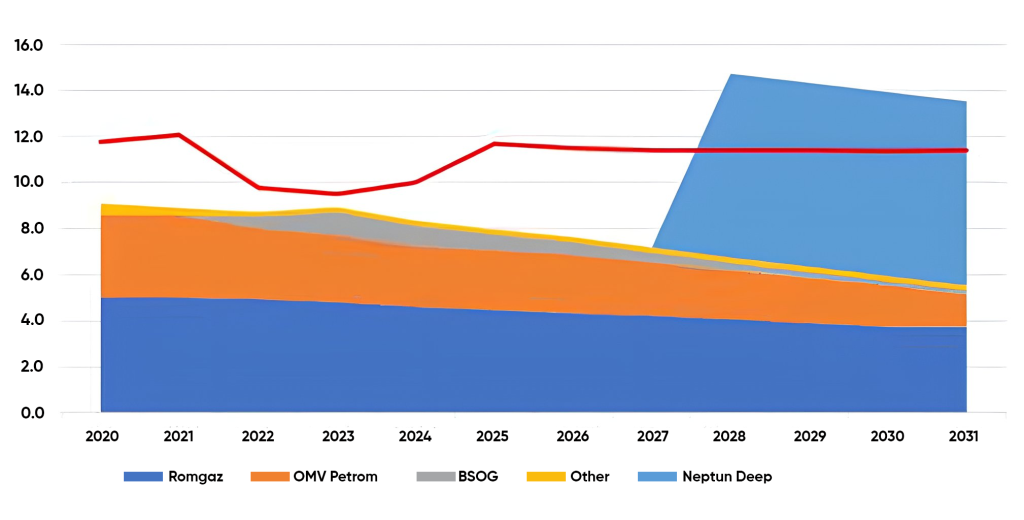
Figure 7 – Projection of Romania Gas Production/Demand (2022-2031)
Source: Data computed from Transgaz, Development Plan
Thus, Neptun Deep consists of gas resources of approximately 100 bcm which will start feeding into the system in 2027. Once fully operational, this gas field will provide around 10 bcm per year, increasing the country’s current output considerably and transforming Romania into a net exporter almost immediately, consolidating its position as the EU’s largest gas producer.
All the more, Romania shall be able to play a key role as a regional hub and stable EU-wide supplier, as it also advanced new capabilities in terms of transport infrastructure and connectivity, led by the state-owned operator, Transgaz. In this regard, the key milestones refer to three particular axes of development and/or operationalization: (a) the BRUA pipeline (Bulgaria-Romania-Hungary-Austria), a bidirectional flow corridor, functional since 2020, which still requires work in finalizing the upcoming phases (II and III) and expanding its capacities; (b) upgrades in reverse flow routes, compressor station build-ups and modernization in order to enable Romania as a regional gas node; (c) acceleration and increase of the number of interconnectors with Moldova and Ukraine which serve a dual role, both as security-of-supply tools and political statements of alignment and solidarity.
Taking into consideration these developments as a blueprint for the foreseeable interval, Romania is definitely marking a structural shift from energy decline towards regional supply leadership. The deliberate increase of pipeline capacity, build-up of interconnectors, compressors, coupled with the operationalization of new gas fields onshore and offshore are all clear indicators that Bucharest intends not only to meet its domestic demand, but assume the role of a privileged transit-and-production hub in this part of the European Union.
Therefore, acting as a regional facilitator and reconfiguring its strategic role as a trusted supplier, Romania is set to serve as a stabilizing cornerstone of EU energy security, providing reliable volumes in an era of increased volatility, capable of contributing to both Southeast Europe’s resilience and the broader European diversification effort.
Conclusions: From Fjord to Delta: A New Energy Nexus
In the aftermath of the geopolitical turmoil that caught Europe off guard, both in military and economic terms, the bloc faces overlapping crises, with a war waging in the East, tariff tensions rising over the Atlantic and intense polarization increasing within the Union. On top of this, the problem of energy availability and prices compounded the challenges in the near future: accustomed to stable, cheap and scalable supplies of Russian gas, the European Union is in dire need of diversifying its sources and stabilizing the flows needed to keep its industry afloat.
| Norway | Romania | Combined Impact on EU Energy Security | |
| Primary Energy Contribution | Natural gas, hydropower | Natural gas (incl. offshore), nuclear, renewables | Balanced mix of transition and low-carbon energy sources |
| Geographic Area of Influence | Northern/ Western Europe, North Sea exporter | Southeastern/Central Europe, Eastern border hub | Comprehensive coverage of European energy markets |
| Infrastructure Connectivity | High (established) | Medium (expanding) | Diversified delivery routes and supply mechanisms |
| Energy Storage Capacity | High | Moderate gas, low electricity (developing) | Critical balancing capacity for renewable integration |
| Projected 2030 Gas Export Capacity | 110–120 bcm | 8–10 bcm | Significant reduction in external dependency |
| Hydrogen Readiness / Potential | Advanced (green/blue hydrogen, export capability) | Emerging (pilot projects, EU-funded initiatives) | Strategic alignment with EU hydrogen transition goals |
| Energy Market Integration | Full integration via Nord Pool, ENTSO-E member | Integrated in EU internal market, ENTSO-E member | Enhanced flexibility, cross-border electricity trading |
| Geopolitical Stability / Risk Buffer | High stability, non-EU NATO ally, North Sea anchor | EU/NATO member near high-risk zone (Ukraine), transit potential | Reliable partners providing geographic and political diversification |
So far in this conundrum, both the high North and the deep East of the Union proved to be versatile components of energy stability. As crucial pillars for the EU blueprint, Norway and Romania are set to further consolidate their positions as key players in the bloc’s energy market, fulfilling strategic roles through complementary, but distinct resources and capabilities. It might be difficult to function carefree-and-careless (as before) without Russian gas, but the extra mile gone by Norway and Romania really is a bulwark against an internal scramble for resources, pitting member state against member state. The improvised structure, running from fjord to delta, might be truly sufficient to buy the EU the time it needs to reshape its energy position.
Methodology Notes
This analysis draws on data from official government publications, international energy agency reports, regulatory documentation, and industry assessments. All figures reflect the current available information at time of publication or historical data from the periods under scrutiny. Projections represent consensus forecasts derived from multiple official sources.