Romania’s Strategic Role in Ukraine’s Post-War Resource Revival: Technical Expertise, Infrastructure, and Educational Alliances for a Sustainable Future
The recent U.S.-Ukraine minerals agreement, signed on April 30, 2025, marks a significant shift in Eastern Europe’s resource landscape. This deal grants the United States preferential access to Ukraine’s critical minerals, including rare earth elements, oil, and gas, in exchange for financial and military assistance to aid Ukraine’s reconstruction efforts . Given Romania’s historical expertise in the oil and gas sector, this development presents both opportunities and challenges for the country.
The agreement establishes a joint investment fund, with both nations contributing equally. Ukraine retains ownership of its resources, and profits from new ventures will fund investments in mining, oil, gas, and infrastructure, with no profits withdrawn for the first ten years . This partnership aims to reduce global reliance on China’s dominance in rare earth elements, which currently accounts for up to 99% of global processing capacity .
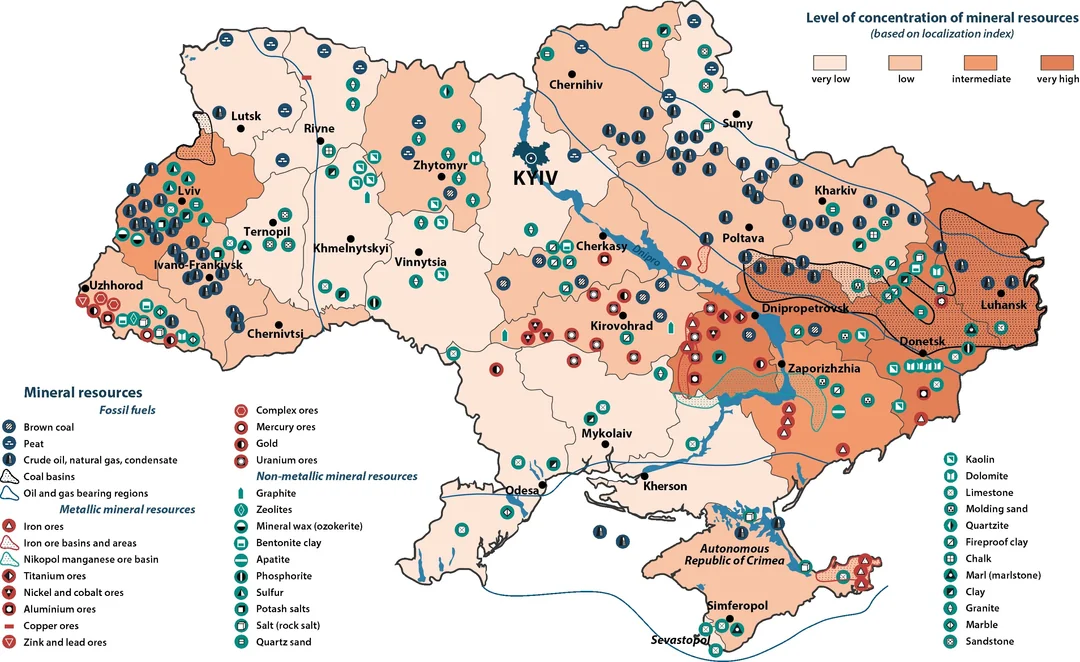
Ukraine possesses 22 of the 34 minerals identified by the EU as critical for industries such as defense, high-tech, and green energy . Notably, the country has around 20,000 deposits of ore-bearing minerals, including significant reserves of titanium, rare earths, lithium, and graphite . However, many of these resources remain underdeveloped due to outdated Soviet-era systems and insufficient funding.
Romania has a rich history in the oil and gas industry, being among the first countries to industrialize oil production. In 1857, the world’s first refinery was established in Ploiești, and by the early 20th century, Romania was one of the largest oil producers globally . This legacy has fostered a wealth of expertise and a robust infrastructure that can be leveraged in regional collaborations.
Potential Roles for Romania
Given the evolving dynamics, Romania can play several strategic roles:
- Technical Collaboration: Romanian specialists can offer their expertise to aid Ukraine in modernizing its extraction and processing facilities.
- Infrastructure Development: Romania’s existing infrastructure can support the transportation and processing of Ukrainian resources, facilitating efficient supply chains.
- Educational Partnerships: Romanian institutions can provide training and educational programs to build Ukraine’s human capital in the energy sector.
The U.S.-Ukraine deal is poised to reshape the economic landscape of Eastern Europe. By integrating Ukraine more deeply into Western economic structures, the agreement may spur regional growth and stability. Romania, as a neighboring EU member with a vested interest in regional security and prosperity, stands to benefit from increased trade and investment opportunities.
While opportunities abound, several challenges must be addressed:
- Security Concerns: Ongoing conflicts in Eastern Ukraine may pose risks to investments and operations.
- Regulatory Alignment: Harmonizing legal and regulatory frameworks between Romania and Ukraine is essential for seamless collaboration.
- Environmental Standards: Ensuring sustainable practices in resource extraction and processing is crucial to mitigate environmental impacts.
Technical Collaboration: Romanian specialists can offer their expertise to aid Ukraine in modernizing its extraction and processing facilities
Romania, with over 160 years of continuous activity in the oil and gas sector, possesses an institutional, technological, and human resource infrastructure that positions it as a valuable partner for Ukraine’s post-war recovery and industrial revival. The country’s historical milestones in energy development—from hosting the world’s first industrial oil refinery in Ploiești in 1857 to building a complex upstream and downstream petrochemical sector during the 20th century—have generated a pool of highly specialized experts, technical consultants, and academic centers with significant experience in extraction, processing, and environmental management.
Ukraine’s critical raw material sector, while vast in terms of geological deposits, has suffered from underinvestment, outdated Soviet-era technologies, and structural inefficiencies. For example, Ukraine’s lithium, graphite, and rare earth reserves remain largely untapped not due to lack of potential, but because of the technological and managerial gaps in modern extraction methods, environmental standards, and supply chain optimization. Romanian geologists, engineers, and energy project managers can help bridge these gaps by providing:
- Site rehabilitation strategies for war-damaged extraction facilities, especially in the Donbas and Dnipropetrovsk regions.
- Technical audits and feasibility studies to assess the commercial and ecological viability of new projects.
- Integrated digital solutions for extraction logistics and environmental monitoring, building on Romania’s recent progress in digitizing resource management systems.
Romanian energy companies such as OMV Petrom, Transgaz, and Romgaz, along with Romanian academic institutions like the University of Oil and Gas in Ploiești or the Technical University of Cluj-Napoca, can form consortia or joint ventures with Ukrainian state and private actors to build or rehabilitate extraction infrastructure. Furthermore, such partnerships could be facilitated and financed under broader EU Neighborhood Policy instruments, NATO resilience funds, and bilateral programs such as the Romania-Ukraine Cross-Border Cooperation Programme (ENI CBC).
In practical terms, Romanian collaboration can include:
- Deployment of Romanian mobile refining units and modular processing technologies.
- Transfer of pollution mitigation technologies, particularly for heavy metals and chemical waste near mining zones.
- Development of best-practice compliance protocols for Ukrainian operators based on Romania’s alignment with EU industrial safety directives (e.g., Seveso III Directive).
This technical collaboration would not only accelerate Ukraine’s recovery but would strengthen Romania’s strategic role in securing the EU’s supply of critical raw materials while reinforcing the regional value chains emerging from the Black Sea economic corridor.
Infrastructure Development: Romania’s existing infrastructure can support the transportation and processing of Ukrainian resources, facilitating efficient supply chains
Romania is uniquely positioned as a logistical gateway for Ukraine’s integration into Western markets, particularly through its extensive rail, port, road, and pipeline systems that serve both continental Europe and international shipping lanes via the Black Sea. As Ukraine seeks to commercialize its rich deposits of lithium, graphite, titanium, and rare earths, the role of Romania in offering efficient and secure transit infrastructure becomes a cornerstone of regional economic resilience.
Key infrastructural assets include:
- The Port of Constanța: Eastern Europe’s largest port, Constanța can be expanded to handle additional mineral exports. The port already manages transshipment for oil, cereals, and industrial goods and is connected to the Danube by the Danube-Black Sea Canal, allowing for multimodal freight options.
- The Pan-European Corridor IV: This network integrates Romanian motorways and railroads with Ukraine’s southwestern border, supporting high-capacity transport of goods. Modernization of cross-border terminals like Halmeu, Sighetu Marmației, and Siret can streamline customs, warehousing, and security controls.
- The BRUA gas pipeline and Transgaz’s infrastructural projects: These enable gas flows and interconnection between Bulgaria, Romania, Hungary, Austria, and potentially Ukraine, facilitating not only energy export but also the infrastructure for mineral processing facilities powered by stable energy supply.
Romania can further play a critical role in hosting logistics hubs and value-added processing zones near the Ukrainian border. For example, a lithium hydroxide processing plant could be constructed in Maramureș or Suceava, using raw materials shipped from Ukrainian mines. By establishing Romanian-based processing and finishing capacity, the region avoids the inefficiencies of shipping unprocessed ore to distant markets, while fostering employment and technological growth on both sides of the border.
EU structural funds, CEF (Connecting Europe Facility), and international financial institutions like the EBRD and World Bank are potential co-funders of such infrastructural developments. Romania’s National Recovery and Resilience Plan (PNRR) also includes components related to cross-border connectivity and green industrialization, offering an avenue to strategically link Romanian and Ukrainian priorities.
In summary, Romanian infrastructure can become a strategic enabler of Ukraine’s post-war resource-based recovery, positioning Romania as a critical node in the EU’s mineral security strategy and reinforcing regional integration through resilient, sustainable, and high-capacity logistics systems.
Educational Partnerships: Romanian institutions can provide training and educational programs to build Ukraine’s human capital in the energy sector
Human capital is a foundational element of sustainable development. For Ukraine, the war has severely impacted the educational ecosystem, including technical and vocational institutions essential to the energy and industrial sectors. Many universities and colleges have suffered physical destruction, faculty displacement, or functional degradation due to ongoing instability. Against this backdrop, Romanian educational institutions can offer both immediate support and long-term partnership to rebuild Ukraine’s technical human infrastructure.
Romania has a dense network of technical universities and polytechnics with recognized experience in energy engineering, geosciences, environmental technology, automation, and chemical engineering. Institutions such as:
- Univeristy of Petroșani
- University of Oil and Gas in Ploiești
- Politehnica University of Bucharest
- Gheorghe Asachi Technical University of Iași
- Transilvania University of Brașov
They all have the academic capacity and institutional interest to develop cross-border educational frameworks, supported by European programs like Erasmus+, Horizon Europe, and the EU4Skills initiative.
Key cooperation formats could include:
- Joint degree programs in energy management, extraction engineering, and critical raw materials processing.
- Remote learning platforms co-developed with Ukrainian universities for students unable to attend in-person classes.
- Faculty exchange programs and visiting professorships to rebuild academic capacity in key Ukrainian institutions.
- Dual vocational training centers funded through the European Investment Bank or EU pre-accession instruments.
Furthermore, Romanian think-tanks and professional associations—such as the Romanian Association of Petroleum Engineers or the National Agency for Mineral Resources (ANRM)—can offer certified training programs and mentoring schemes for Ukrainian professionals transitioning from military service or reskilling into the civilian energy workforce.
A forward-looking opportunity lies in joint innovation hubs and research clusters, possibly located in Cluj-Napoca, Iași, or Galați, that focus on green mineral extraction, circular economy models for mining waste, and energy-efficient refinery design. Such academic-industrial partnerships can place both Romania and Ukraine at the forefront of critical mineral innovation in Eastern Europe.
In sum, educational partnerships not only aid in immediate capacity building but also establish lasting ties that align Ukraine’s reconstruction with European standards and deepen Romania’s regional leadership in energy education, innovation, and sustainable development.
The U.S.-Ukraine minerals agreement opens new avenues for regional cooperation and economic development. Romania, with its historical expertise and strategic position, is well-placed to play a pivotal role in Ukraine’s post-war reconstruction and resource exploitation. By fostering collaboration, investing in infrastructure, and sharing knowledge, Romania can contribute to a more integrated and prosperous Eastern Europe.
Sources:
- Al Jazeera – What is in the US-Ukraine minerals deal?
https://www.aljazeera.com/news/2025/5/1/what-is-in-the-us-ukraine-minerals-deal - Reuters – Ukraine revamps minerals sector, eyes billions in investment from US deal
https://www.reuters.com/world/europe/ukraine-revamps-minerals-sector-eyes-billions-investment-us-deal-2025-05-27/ - Center for Strategic and International Studies (CSIS) – What to Know About the Signed U.S.-Ukraine Minerals Deal
https://www.csis.org/analysis/what-know-about-signed-us-ukraine-minerals-deal - Mayer Brown – US-Ukraine Minerals Deal: Unlocking Ukraine’s Mineral Potential
https://www.mayerbrown.com/en/insights/publications/2025/05/us-ukraine-minerals-deal-unlocking-ukraines-mineral-potential - S. Department of the Treasury – Treasury Announces Agreement to Establish United States-Ukraine Reconstruction Investment Fund
https://home.treasury.gov/news/press-releases/sb0126 - The White House – Fact Sheet: President Donald J. Trump Secures Agreement to Establish United States-Ukraine Reconstruction Investment Fund
https://www.whitehouse.gov/fact-sheets/2025/05/fact-sheet-president-donald-j-trump-secures-agreement-to-establish-united-states-ukraine-reconstruction-investment-fund/ - The Times – Inside Zelensky’s mineral deal with US – by minister who signed it
https://www.thetimes.co.uk/article/inside-zelensky-mineral-deal-us-lh60qbgts - Columbia University Center on Global Energy Policy – Unpacking the US–Ukraine Minerals Deal
https://www.energypolicy.columbia.edu/unpacking-the-us-ukraine-minerals-deal/ - Council of European Policy Studies (CEPS) – Much more than minerals: the US-Ukraine minerals agreement and its geopolitical implications
https://www.ceps.eu/ceps-publications/much-more-than-minerals-the-us-ukraine-minerals-agreement-and-its-geopolitical-implications/ - Northeastern University News – ‘No credible evidence’ that Ukraine has rare earth minerals, says Northeastern expert
https://news.northeastern.edu/2025/02/27/us-ukraine-critical-minerals-deal/ - BBC News – What minerals does Ukraine have and what are they used for?
https://www.bbc.com/news/articles/c20le8jn282o - Al Jazeera – Mapping Ukraine’s rare earth and critical minerals
https://www.aljazeera.com/news/2025/2/28/mapping-ukraines-rare-earth-and-critical-minerals - The Chemical Engineer – US and Ukraine sign minerals deal set to reduce China’s rare earths dominance
https://www.thechemicalengineer.com/news/us-and-ukraine-sign-minerals-deal-set-to-reduce-china-s-rare-earths-dominance/ - NATO Energy Security Centre of Excellence – Ukraine’s resources. Critical raw materials
https://www.enseccoe.org/publications/ukraines-resources/ - Carnegie Endowment for International Peace – Ukraine’s Not So Critical Mineral Deposits
https://carnegieendowment.org/europe/strategic-europe/2025/04/ukraines-not-so-critical-mineral-deposits?lang=en - IEEE Spectrum – Rare Earths Reality: Ukraine’s Nonexistent Deposits
https://spectrum.ieee.org/ukraine-rare-earth-minerals - The Washington Post – What are Ukraine’s critical minerals actually worth? No one knows.
https://www.washingtonpost.com/world/2025/02/28/ukraine-us-rare-minerals/ - Center for International Relations and Sustainable Development (CIRSD) – The Mineral Wars – How Ukraine’s Critical Minerals Will Fuel Future Geopolitics
https://www.cirsd.org/en/horizons/horizons-winter-2025-issue-no-29/the-mineral-wars - Radio Free Europe/Radio Liberty – Romania’s Age Of Oil
https://www.rferl.org/a/romania-oil/31510946.html - Wikipedia – Petrochemical industry in Romania
https://en.wikipedia.org/wiki/Petrochemical_industry_in_Romania - OMV Petrom – History | OMVPetrom.com
https://www.omvpetrom.com/en/about-us/company/history - World Record Academy – World’s First Oil Refinery: the city of Ploiesti
https://www.worldrecordacademy.org/technology/worlds-first-oil-refinery-ploiesti-218277 - Investment Reports – World’s First: Onshore Exploration and Production
https://www.investmentreports.co/article/worlds-first-onshore-exploration-and-production-86 - Wikipedia – Steaua Română
https://en.wikipedia.org/wiki/Steaua_Rom%C3%A2n%C4%83 - Wikipedia – Vega Refinery
https://en.wikipedia.org/wiki/Vega_Refinery