Executive perspective: a border location becoming a European business platform
Siret is no longer best understood simply as a Romanian border town. It is increasingly relevant as a potential industrial, logistics and innovation platform positioned at one of the European Union’s most consequential external frontiers. Located in Suceava County, close to the Romanian–Ukrainian border and directly connected to the E85 road axis, Siret offers investors a rare combination: access to the European single market, proximity to Ukraine and the wider Black Sea region, a comparatively competitive cost base, available industrial land, public-sector support and an emerging research and technology ecosystem.
The Siret Industrial Park – officially developed as the East European Border Industrial Park – was conceived precisely around this strategic geography. Its investment proposition is not based on location alone. The park combines industrial and logistics functions with fiscal incentives, utility access, workforce development and an institutional partnership involving the Municipality of Siret, Suceava County Council and “Ștefan cel Mare” University of Suceava. This cooperation between local government, county-level administration and academia is one of the project’s strongest differentiators. It gives investors a practical institutional framework for site development, labour-force preparation, technology transfer and long-term regional integration.
For companies considering manufacturing, assembly, logistics, warehousing, agri-food processing, cold-chain operations, business services, technology development or cross-border supply-chain activities, Siret can serve both as a production location inside the EU and as a gateway toward markets and reconstruction opportunities to the east. The geopolitical environment has increased the value of resilient logistics routes, diversified production footprints and proximity to Ukraine. Siret’s position places it at the intersection of all three.
A strategically located industrial platform
The official park profile identifies a total surface of approximately 15.9 hectares, with the possibility of extension by a further 25 hectares. The site is allocated for economic development, and investors may purchase or concession multiple plots, subject to the park’s regulations and applicable public-law procedures. The proposed functions include industrial halls, cargo logistics halls, customs warehouses, temperature-controlled storage and office space.
The park’s location near the E85 corridor is central to its commercial logic. The Siret customs point is a major crossing between Romania and Ukraine, while the broader road network links the area southward to Suceava, Bacău, Bucharest and the Black Sea. The park’s own documentation lists Suceava International Airport at approximately 43 kilometres and the railway at about two kilometres from the site. The same profile indicates distances of roughly 388 kilometres to the Danube port of Galați and 576 kilometres to the Port of Constanța. These figures should be treated as route references rather than guaranteed transit times, but they demonstrate the park’s potential for multimodal and international logistics.
This geography creates several investor use cases. A manufacturer can operate inside the EU regulatory and customs environment while remaining close to Ukrainian customers and suppliers. A logistics company can build capacity for road freight, consolidation, customs-related operations and future reconstruction flows. An agri-food investor can develop processing and temperature-controlled storage serving northern Romania, western Ukraine and export routes toward the Black Sea. Technology and engineering companies can use Siret as a test bed for Industry 4.0 applications in a region where industrial modernisation and infrastructure expansion are occurring simultaneously.
The location also offers strategic redundancy. European supply chains have learned that over-concentration in a small number of corridors, ports or industrial regions can create systemic vulnerability. Siret adds an eastern production and logistics option connected to Romania’s growing high-speed road network and to the EU’s broader transport architecture.





The industrial park offer: land, infrastructure and fiscal advantages
According to the park’s official materials, utilities available or planned at the site include access to natural gas, water, electricity, telecommunications, fibre-optic internet and wastewater infrastructure. The park’s synthetic profile also refers to electrical capacity availability and connection points at the park entrance. For any investment decision, technical capacities, connection costs and delivery schedules should be confirmed through updated due diligence with the park administrator and utility operators. Nevertheless, the existence of these planned and available networks materially reduces the early-stage uncertainty associated with greenfield investment.
The industrial park framework also enables local fiscal incentives. The park’s official website lists exemptions from land tax for land used within the park and from building tax for constructions located inside the park, subject to the legal conditions governing industrial parks and local taxation. These incentives can improve the economics of capital-intensive projects, particularly for companies requiring large production, storage or logistics surfaces.
Equally important is the administrative support model. The Municipality of Siret states that it has created a dedicated function to assist investors with bureaucratic formalities and has developed clear procedures for admission into the park. The municipality also highlights cooperation with Suceava County Council, the Trade Registry and local educational institutions. For investors, this type of institutional coordination can be as valuable as a tax incentive. A responsive administration can shorten the time required to understand permitting pathways, identify public infrastructure interfaces, engage local stakeholders and plan workforce needs.
The professional approach adopted by the Siret local administration deserves particular attention. The municipality has not treated the park as an isolated real-estate project. It has pursued a broader economic-development model linking industrial land, public infrastructure, innovation capacity, education and regional partnerships. This approach reflects a practical understanding of what investors require: not only a plot of land, but also predictability, institutional access, a workforce pipeline and a credible long-term development vision.
From industrial park to innovation ecosystem
A major advantage of the Siret proposition is the adjacent Scientific and Technological Park “East European Border” and the Technology Transfer Centre for Industry 4.0 and Smart Destinations developed with “Ștefan cel Mare” University of Suceava. The project was financed through Romania’s 2014–2020 Regional Operational Programme and implemented through a partnership bringing together the Municipality of Siret, Suceava County, the industrial park company and the university as scientific coordinator.
In March 2024, the university announced that its Technology Transfer Centre for Industry 4.0 and Smart Destinations had received accreditation as an entity within Romania’s National Network for Innovation and Technology Transfer for a five-year period. The accredited specialisation areas include digital economy and space technologies, advanced manufacturing and advanced functional materials.
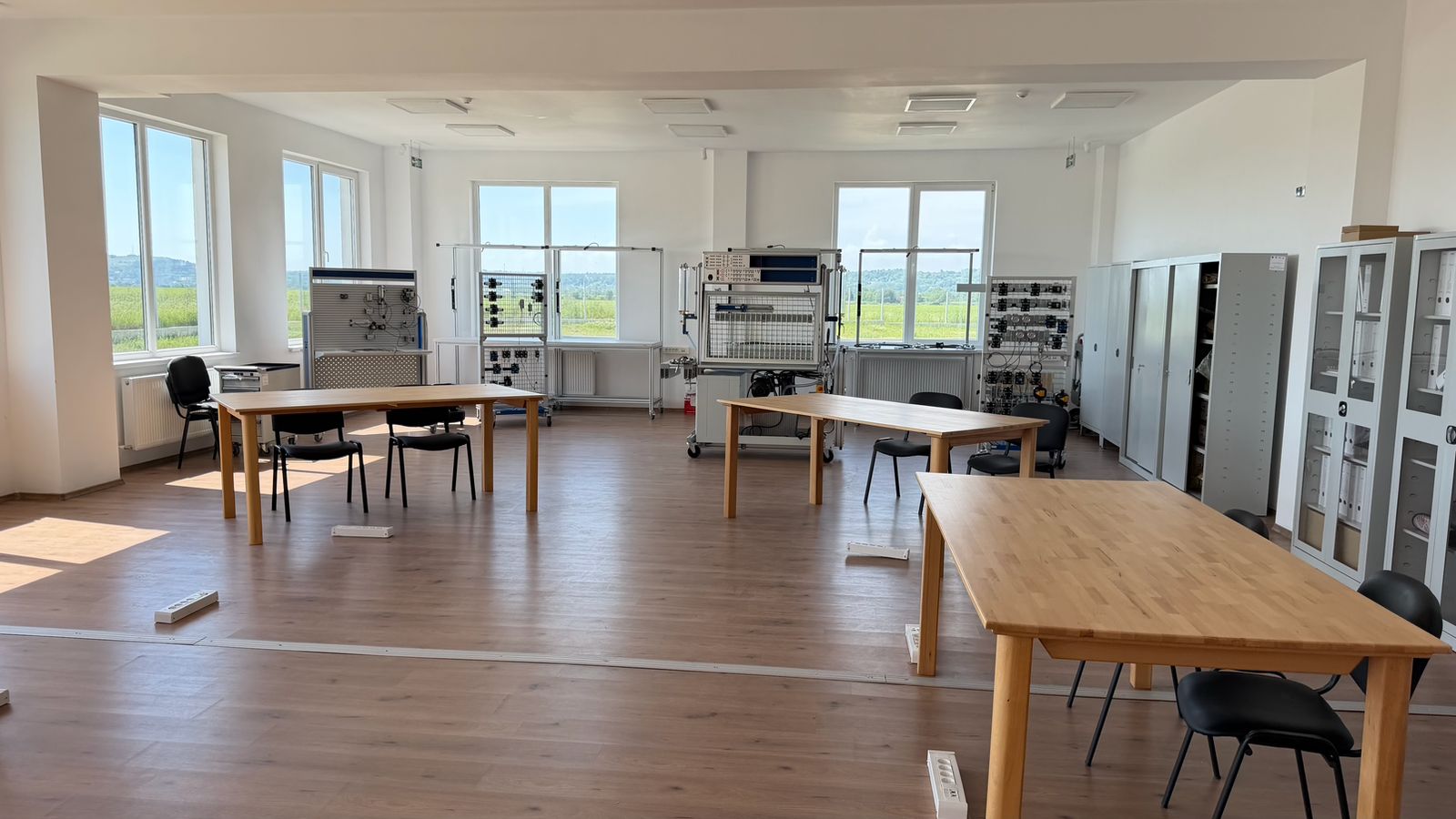
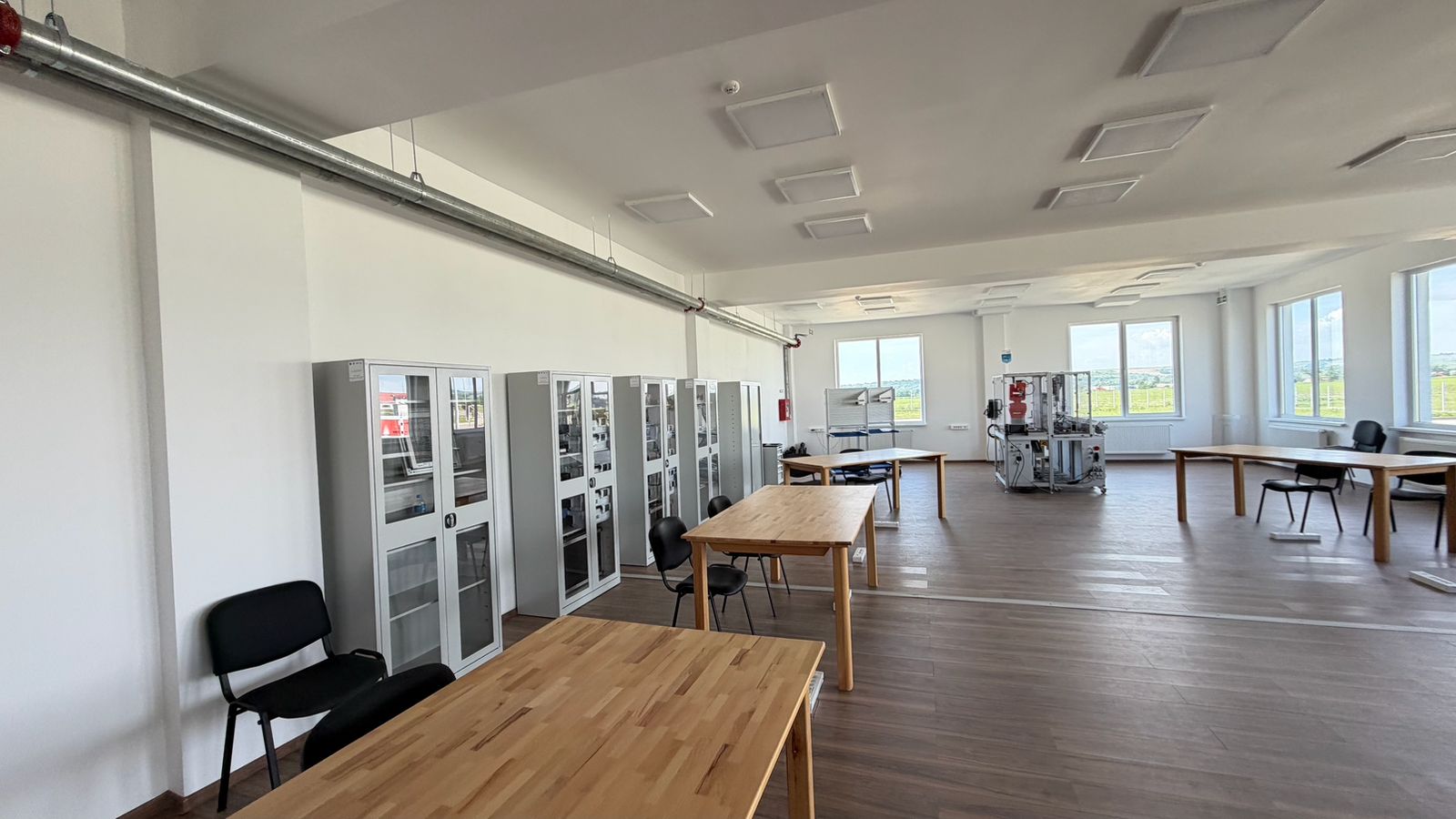
For investors, these are not abstract academic labels. The centre’s facilities and services include an Industry 4.0 innovation and training environment, Bosch Rexroth equipment, a FABLAB, an open-source IT hub and office spaces. The university identifies activities such as research and innovation, prototyping, zero-series manufacturing, small-series production, consulting for the transition from Industry 3.0 to Industry 4.0, intellectual-property support, practical training, robotics and automation testing, traceability solutions and software development.
This infrastructure can significantly reduce the distance between an investment idea and an operational industrial process. A company entering the park may be able to work with academic and technical teams on prototyping, production optimisation, automation, digitalisation and staff training. Small and medium-sized enterprises can access capabilities that would otherwise require substantial internal capital expenditure. Larger investors can use the centre as a regional interface for recruitment, research collaboration and supplier development.
The contribution of “Ștefan cel Mare” University of Suceava is therefore central to the investment proposition. The university gives the project scientific credibility and connects the park to engineering, information technology, automation and applied research expertise. Its role also supports the development of a long-term talent pipeline, which is essential for investors assessing not only wage levels but also the availability of adaptable technical skills.
Workforce and education: an investable human-capital proposition
The park’s official investor materials underline the availability of labour in Suceava County and the region’s lower salary costs compared with Romania’s more mature western industrial centres. Because wage statistics change over time, investors should use current official data from the National Institute of Statistics and local labour authorities during financial modelling. The strategic point remains valid: northern Romania offers a cost base that can be competitive relative to established industrial clusters, while also providing access to a substantial regional population and educational network.
Siret benefits from several layers of workforce support. At local level, technical education institutions can contribute to vocational preparation. At county level, Suceava provides a larger labour market and institutional network. At university level, “Ștefan cel Mare” University can support engineering, digital, research and continuing-training needs. The accredited technology-transfer centre explicitly includes practical training for students, high-school pupils and company personnel.
This layered system is important because investors increasingly require tailored skills rather than simply a large number of available workers. The strongest investment locations are those able to organise cooperation between employers, schools, universities and public authorities. Siret’s public-academic partnership gives it a structure through which curricula, practical training and workforce-conversion programmes can be aligned with real industrial demand.
The Municipality of Siret and Suceava County Council can play a convening role, bringing together investors, education providers and employment institutions. The county council’s sustained support for the scientific and technological park demonstrates an understanding that regional competitiveness depends on more than roads and utilities. It also depends on knowledge infrastructure, innovation services and the ability to retain young people through qualified employment.
The public administration factor
Investors often evaluate public administration as carefully as infrastructure. Permits, land status, utility coordination, local taxes, planning rules and communication can materially influence project timing and cost. In this context, the cooperation between the Municipality of Siret, Suceava County Council and “Ștefan cel Mare” University is a strong signal.
The Municipality of Siret has acted as a project leader and promoter, advancing both the industrial park and the scientific and technological component. Its public communications emphasise direct support for investors and a willingness to engage in dialogue. This investor-oriented posture is especially relevant for international companies that require a reliable local counterpart able to coordinate information across institutions.
Suceava County Council adds regional capacity and political-administrative support. Its participation strengthens the connection between Siret and county-wide infrastructure, education, economic-promotion and development policies. The council’s involvement in the scientific and technological park also helps ensure that the investment platform is integrated into a broader regional strategy rather than remaining a stand-alone municipal initiative.
The university contributes scientific governance, specialised equipment, knowledge transfer and credibility. Together, the three institutions form a practical “triple helix” model: public administration, academia and business infrastructure working around a shared development objective. For an investor, this can translate into faster problem-solving, better access to expertise and stronger local legitimacy.
The TEN-T context and Romania’s north–south high-speed road transformation
Siret’s strategic relevance is reinforced by the transformation of Romania’s transport network and by the EU’s revised Trans-European Transport Network framework. Romania is part of the Baltic Sea–Black Sea–Aegean Sea European Transport Corridor, which connects the eastern flank of the European Union from the Baltic region through Central and Eastern Europe toward Romania, Bulgaria and Greece. Constanța is one of the major Black Sea gateways within this wider architecture.
The road axis from the Bucharest region through Ploiești, Buzău, Focșani, Bacău, Pașcani and Suceava toward Siret is being developed in stages. The southern and central parts of the A7 Moldavia Motorway have progressed substantially, while the motorway is being extended north from Pașcani to Suceava. In May 2026, contracts were signed for the two Pașcani–Suceava motorway lots, covering approximately 62 kilometres.
North of Suceava, the Suceava–Siret project is structured as a high-speed express road of approximately 55.7 kilometres, continuing the A7 corridor toward the Ukrainian border. In 2026, contracts were signed for the first two lots, covering approximately 43 kilometres. Reported contractual periods include design phases of nine to twelve months and construction periods of twenty-four months. The project is linked to European SAFE financing, with reported completion requirements no later than 2030.
This distinction is important for investor communications. It would not be accurate, based on the verified schedules available in July 2026, to promise that the entire route from Bucharest to the Siret Industrial Park will operate continuously as motorway or express road by the end of 2027. The investable fact is different and still highly significant: financing has been secured for strategic northern extensions, major contracts have been signed, and the Bucharest–Moldavia–Suceava–Siret corridor is under active delivery as a national and European priority.
As sections are completed, the economic geography of Siret will change. Travel-time reliability will improve, freight movements will become more predictable and the park will gain faster access to Romania’s central and southern markets. The corridor will also provide an increasingly efficient connection toward the Port of Constanța through the A7 and the Bucharest motorway network. Constanța is Romania’s principal Black Sea port and a key gateway for container, bulk and regional trade flows. For investors in Siret, the corridor strengthens the possibility of integrating road-based production and logistics with maritime export routes.
Connection to Ukraine and future reconstruction demand
Siret’s proximity to Ukraine creates both immediate and long-term economic relevance. In the near term, the area supports trade, humanitarian logistics, transport and supply-chain activity. Over the longer term, Ukraine’s reconstruction will require enormous volumes of construction materials, equipment, energy systems, transport services, food products, medical supplies, digital solutions and industrial capacity.
Companies established in Siret would operate on EU territory, under Romanian and European law, while remaining close to the Ukrainian market. This can be attractive for firms that need a stable European base for regional operations. It may also support partnerships with Ukrainian companies seeking access to EU production, certification, finance and logistics networks.
The park should not be marketed solely as a “Ukraine opportunity.” Its value is broader and more durable. Siret connects northern Romania, the EU internal market and Black Sea routes. However, the eastern-border position creates an additional strategic layer that few other Romanian industrial parks can offer.
Investors should also recognise the importance of risk management. Cross-border business requires careful analysis of customs rules, sanctions compliance, insurance, security, currency exposure and transport capacity. The value of Siret is that these risks can be managed from an EU location supported by Romanian institutions and connected to European infrastructure investment.
Priority investor profiles
The Siret platform is particularly relevant for several categories of investors.
Manufacturing and assembly companies can benefit from industrial land, competitive operating costs, access to technical training and proximity to regional markets. Activities may include metal processing, electrical equipment, components, light manufacturing, machinery assembly and building-material production.
Logistics and warehousing operators can use the border location for consolidation, distribution, customs-related services, temperature-controlled storage and cross-border freight. The park’s proposed building functions explicitly include logistics halls, customs warehouses and controlled-temperature spaces.
Agri-food investors can serve a region with significant agricultural potential while accessing domestic, Ukrainian and Black Sea routes. Processing, packaging, storage and cold-chain activities are natural candidates.
Technology and Industry 4.0 companies can work with the university-linked transfer centre on prototyping, automation, robotics, traceability and software. The presence of the FABLAB and specialised equipment creates opportunities for engineering services, product development and small-series production.
Construction, infrastructure and reconstruction suppliers may find Siret valuable as a base for serving northern Romania and future Ukrainian demand. This category includes prefabricated elements, utilities equipment, modular buildings, energy systems, road and rail components and specialised services.
Business-services and support companies can provide engineering, customs, compliance, procurement, logistics management, translation, software and professional services to the emerging industrial ecosystem.
Why the Siret proposition is stronger than a conventional industrial park
A conventional industrial park offers land and utilities. Siret offers a wider platform.
First, it has a distinctive border position at the eastern edge of the EU. Second, it is connected to a major national high-speed road programme that is progressively extending north. Third, it includes local fiscal incentives and investor support. Fourth, it is paired with an accredited technology-transfer and innovation centre. Fifth, it is backed by a working partnership between municipal, county and academic institutions.
This combination reduces several categories of investment risk. Administrative risk is mitigated by dedicated local support. Skills risk is addressed through educational and university partnerships. Technology risk can be reduced through prototyping and transfer services. Logistics risk is being addressed through strategic road investment. Expansion risk is moderated by the park’s stated potential for additional land.
The professionalism of the local administration is particularly relevant. The Municipality of Siret has demonstrated the capacity to build partnerships, attract European funding and deliver a complex innovation project. Suceava County Council has provided regional support and institutional continuity. “Ștefan cel Mare” University has converted academic capacity into accredited, investor-relevant services. These are concrete indicators of implementation capability.
Investor due diligence and next steps
An investor considering Siret should undertake a structured due-diligence process. The first step is to confirm current land availability, plot configuration, ownership or concession terms, planning status and park admission procedures. The second is to obtain updated technical data for electricity, gas, water, sewerage, fibre connectivity and road access. The third is to assess labour availability, wage levels, training needs and recruitment catchment areas using current official statistics.
The investor should also engage the Technology Transfer Centre to identify relevant equipment, laboratories, prototyping services and training programmes. Logistics modelling should include current road conditions, future A7 and Suceava–Siret commissioning stages, border-crossing capacity, rail options, Suceava Airport and routes toward Constanța and Galați.
For projects linked to Ukraine, due diligence should include customs, sanctions, export-control and insurance advice. Companies should also evaluate Romanian and EU state-aid instruments for which the investment may qualify, without assuming eligibility until confirmed by the competent authorities.
The most effective next step is direct institutional engagement. A coordinated meeting with the park administrator, the Municipality of Siret, Suceava County Council and university representatives can provide a comprehensive view of the site, permits, incentives, workforce and technology services.
Conclusion: Siret is an eastern EU location with long-term strategic value
Siret Industrial Park represents an opportunity to invest ahead of a major shift in regional economic geography. The combination of EU-border positioning, industrial land, fiscal facilities, public-sector commitment, university-backed innovation and large-scale transport investment creates a proposition with relevance well beyond Suceava County.
The strongest argument for Siret is not a single incentive or a single infrastructure promise. It is the alignment of multiple development forces: Romania’s expanding high-speed road network, the strategic importance of the EU’s eastern frontier, the growing role of the Black Sea and Constanța, the need for resilient supply chains, Ukraine’s future reconstruction, and the emergence of applied research and Industry 4.0 capacity in northern Romania.
The Municipality of Siret has shown ambition and administrative focus by promoting an investor-support model and leading the development of the scientific and technological park. Suceava County Council has reinforced the project with regional backing and development capacity. “Ștefan cel Mare” University of Suceava has added the knowledge, equipment and human-capital dimension required by modern investors.
For companies seeking an EU production, logistics or innovation base with access to both established European markets and emerging eastern opportunities, Siret merits serious consideration. It is a location where strategic geography is increasingly being matched by infrastructure, institutions and knowledge.
Selected facts for investors
| Indicator | Verified position |
| Park area | Approximately 15.9 ha; official materials indicate potential extension by 25 ha. |
| Permitted/anticipated functions | Industrial halls, cargo logistics, customs warehousing, temperature-controlled storage and offices. |
| Nearby connections | E85 road access; railway approximately 2 km; Suceava International Airport approximately 43 km, according to the park profile. |
| Fiscal facilities | Official park materials list land- and building-tax exemptions subject to applicable legal conditions. |
| Innovation infrastructure | Accredited USV Technology Transfer Centre for Industry 4.0 and Smart Destinations, with FABLAB, open-source IT hub and advanced-manufacturing equipment. |
| Road corridor status, July 2026 | Pașcani–Suceava motorway contracts signed; Suceava–Siret express-road contracts signed for major lots; full Bucharest–Siret continuous high-speed operation should not be presented as guaranteed by end-2027. |
Sources
- Industrial Park Siret, official website: https://industrialparksiret.ro/
- Industrial Park Siret synthetic profile: https://industrialparksiret.ro/wp-content/uploads/2016/09/Fisa-sitetica-IPS-EEB-RO.pdf
- “Ștefan cel Mare” University of Suceava, accreditation of the Technology Transfer Centre, 28 March 2024: https://usv.ro/centrul-de-transfer-tehnologic-in-industry-4-0-si-smart-destinations-al-usv-a-fost-acreditat-prin-ordin-al-ministrului-cercetarii-inovarii-si-digitalizarii/
- European Commission, TEN-T Maps of the European Transport Corridors, 2 July 2024: https://transport.ec.europa.eu/transport-themes/infrastructure-and-investment/trans-european-transport-network-ten-t/tentec-information-system-and-ten-t-map-library/ten-t-maps-european-transport-corridors_en
- Digi Economic, Suceava–Siret Express Road contracts and schedules, 7 April 2026: https://www.digi24.ro/digieconomic/consumer/contract-de-peste-37-miliarde-lei-pentru-drumul-expres-suceava-siret-cand-este-gata-proiectul-95829
- CNAIR/CNIR public information on the Pașcani–Suceava contracts, May 2026.
- Suceava County Council investment and strategic-development materials.
10 Solid Reasons Why Siret Is the Strategic Choice for Investment at the EU–Ukraine Border
Siret combines European Union market access, direct proximity to Ukraine, competitive operating conditions, industrial infrastructure and an emerging innovation ecosystem. Explore the ten factors that make this location one of the most relevant investment gateways on Europe’s eastern frontier.
Siret is situated directly at Romania’s frontier with Ukraine, giving companies a rare opportunity to operate from within the European Union while remaining close to Ukrainian clients, suppliers and future reconstruction projects.
Investors can combine the legal, financial and regulatory stability of an EU location with immediate access to one of Europe’s most important emerging markets. This position is particularly valuable for manufacturers, construction suppliers, logistics operators, energy companies and infrastructure service providers.
Siret connects northern Romania with Ukraine and provides onward access toward Moldova, Central Europe, the Balkans and the Black Sea region. Its position supports international trade routes linking established European markets with developing eastern markets.
For companies operating across several countries, this creates a strong platform for production, consolidation, regional distribution, warehousing and supply-chain coordination.
The East European Border Industrial Park provides a dedicated environment for industrial and logistics development. Its official profile identifies approximately 15.9 hectares, with the possibility of extending the investment platform by a further 25 hectares.
Anticipated functions include industrial production halls, cargo logistics facilities, customs warehouses, temperature-controlled storage and office spaces. Investors can therefore plan facilities adapted to manufacturing, assembly, agri-food processing, storage or distribution.
The Siret border point is one of the principal road gateways between Romania and Ukraine. Its established passenger, vehicle and freight flows already make the area commercially relevant for international transport and customs-related operations.
Companies established nearby can develop freight consolidation, warehousing, customs support, cold-chain logistics, distribution and cross-border supply services without locating their main operations outside the European Union.
Northern Romania can offer a more competitive cost structure than mature industrial centres in western and central parts of the country. The region combines potential savings in labour, land and operating expenditure with full access to the European Single Market.
This balance is particularly relevant for manufacturing, assembly, processing, logistics and other activities for which cost control must be combined with regulatory predictability and access to European customers.
Siret benefits from access to the wider labour market of Suceava County, technical education institutions and the academic resources of “Ștefan cel Mare” University of Suceava.
Cooperation between employers, vocational schools, public authorities and the university can support recruitment, practical training, technical specialisation and workforce conversion programmes tailored to the needs of individual investors.
Siret is positioned on the E85 axis and will benefit from the progressive extension of Romania’s high-speed road network toward Suceava and the Ukrainian frontier. Contracts have been signed for major northern sections of the Pașcani–Suceava and Suceava–Siret corridors.
The industrial park is also located approximately two kilometres from railway infrastructure and approximately 43 kilometres from Suceava International Airport, according to the park’s official profile.
The industrial park framework allows eligible investors to access local fiscal facilities, including exemptions from land and building taxes under the applicable legal conditions. Such incentives can materially improve the economics of capital-intensive projects.
The Municipality of Siret also promotes an investor-support approach intended to facilitate communication, clarify local procedures and coordinate interaction with relevant public and institutional partners.
Siret’s industrial proposition is reinforced by the Scientific and Technological Park and the accredited Technology Transfer Centre for Industry 4.0 and Smart Destinations, developed in partnership with “Ștefan cel Mare” University of Suceava.
Available capabilities include prototyping, automation, robotics, digitalisation, traceability, software development, practical training, FABLAB facilities and support for small-series or zero-series production.
The investment platform is supported by cooperation between the Municipality of Siret, Suceava County Council and “Ștefan cel Mare” University of Suceava. This partnership connects public administration, regional development, education, research and business infrastructure.
For investors, this institutional alignment can improve access to information, workforce development, technical expertise, regional networks and coordinated problem-solving throughout the life of the investment.
Establish your European base where the EU market meets the opportunities of the East.
Siret offers more than industrial land. It offers strategic geography, European stability, expanding infrastructure, innovation capacity and direct access to a transforming regional market.